
What is ILF neurofeedback?
A modern form of brain training: the brain receives immediate feedback about its own activity and can learn to regulate itself more stably.
In plain language
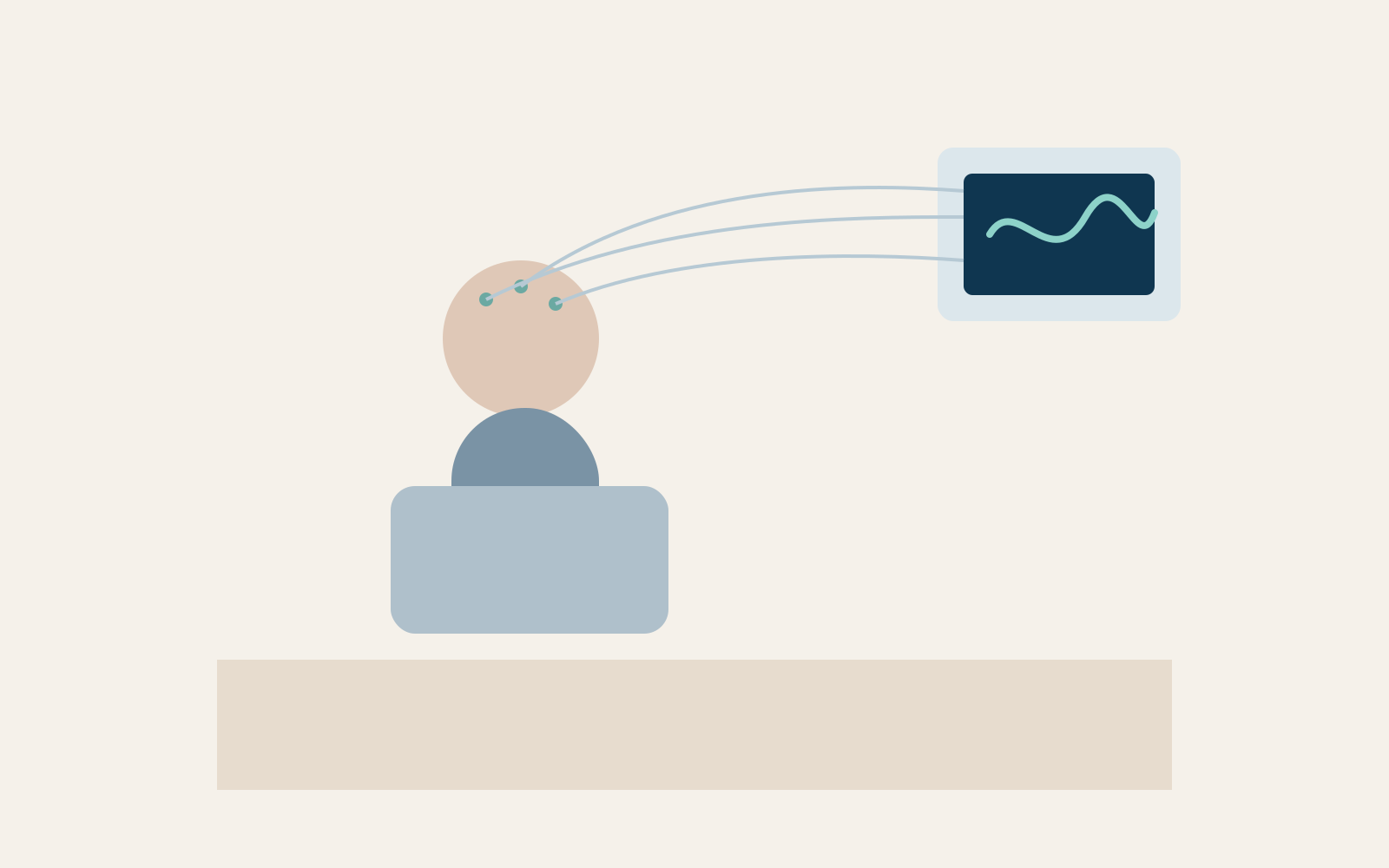
In ILF neurofeedback, small sensors are placed on the scalp. They measure the electrical activity of the brain (EEG) — painlessly and without sending any current into the body.
The measured signals are processed in real time. While you watch a film or animation, your brain receives feedback about its own activity. Over time, more stable patterns of self-regulation may develop.
When is ILF neurofeedback used?
ILF neurofeedback can be used in a supportive way when self-regulation, sleep, attention or stress processing are out of balance. Common areas of application include:
- ADHD / attention difficulties
- Burnout / chronic stress
- Anxiety / depression
- Sleep difficulties
- Migraine / tension headache
- Emotional dysregulation
- Trauma / PTSD (complementary)
What makes ILF special?
ILF stands for Infra-Low Frequency — very slow brain activity. These frequencies are linked to basic functions such as stability, arousal regulation, sleep, attention and stress processing.
The ILF method by Othmer does not use a rigid standard protocol for everyone, but is individually adapted. The goal is the so-called Optimal Frequency — the training range in which your nervous system can learn best.
What does a session feel like?
Many people experience the training as calm, pleasant and not very demanding. Possible changes that may appear during the course include:
- better sleep
- more inner calm
- improved concentration
- less irritability
- greater emotional stability
Since every nervous system reacts differently, I continuously adjust frequency, electrode placement and the course of sessions.
How many sessions are useful?
That depends on your concern, your starting point and the regularity of sessions. First changes sometimes appear after 5 to 10 sessions. For longer-standing or more complex topics, 20 to 40 sessions are often useful. Neurofeedback is a learning process — more comparable to training than to a one-off measure.
Which forms of neurofeedback do I offer?
ILF neurofeedback
To support self-regulation, attention, sleep, stress processing and emotional stability.
Alpha-theta
For complementary, trauma-sensitive work focused on inner processing and stabilisation.
Synchrony
Training the cooperation between different brain regions for calm, focus and better connectivity.
How the training unfolds
Initial consultation
We discuss your concern, your goals and whether neurofeedback may be appropriate for you.
First session
A gentle start with careful observation of your response to the training.
Individual adjustment
Frequency and placements are tuned to your nervous system.
Progress tracking
We observe changes in daily life and adapt the process continuously.
Let's find out together whether it fits
In the free initial consultation we discuss your concern and clarify whether ILF neurofeedback may be useful for you.